Why Every Business Video Needs a Hook (Plus 15 Free Ones for Yours)
You’ve filmed something genuinely useful. The light’s good, you know your stuff and the advice is solid. A handful of people watch it.
The problem usually isn’t the video. It’s the first second of it.
That first second has a name: the hook. Here’s why it matters more than anything else you film, what a good one looks like, and how to get 15 written for your business for free.
What a hook actually is
A hook is the first line of your video, and whatever’s on screen while you say it. It’s the bit that makes someone stop scrolling and think, “Hang on, that’s me.”
Everything else in the video only counts if the hook works. Nobody hears your brilliant second point if they swiped away during your first.
Why the first second decides everything
On Instagram, TikTok, Facebook and LinkedIn, people scroll fast. They decide whether to stop almost before you’ve opened your mouth.
The platforms are watching that decision too. When people stop and keep watching, your video gets shown to more people like them. When they swipe straight past, it quietly stops being shown. So a weak first second doesn’t just lose you one viewer. It can cost you the next thousand.
That’s why, when we edit a client’s video, we spend as long on the opening line as almost anything else.
The openings that waste it
Most business videos start like this:
- “Hi everyone, welcome back…”
- “So, today I want to talk about…”
- “Did you know…?”
- “Okay, so…”
- “Let me tell you about the time…”
Each one spends the most valuable second of the video on nothing. By the time you get to the point, the person you made it for has gone.
What makes a good hook
- It starts in your customer’s world, not yours. Their question, their worry, the mistake they’re about to make. Not your services.
- It’s specific. “Three tips for first-time buyers” is easy to scroll past. “How much deposit do you actually need on a £250,000 house?” isn’t.
- It shows the proof straight away. The finished kitchen, the gallery, the two documents side by side. Put it on screen as you say the line.
- It opens a question the viewer needs answered. They should feel slightly annoyed at the thought of swiping away.
- It’s short. Ten words or fewer is a good target. If it needs a run-up, it isn’t a hook yet.
- It sounds like you. Said out loud, to a phone, the way you’d say it to a customer. (More on that in why your short-form video isn’t working.)
Five kinds of hook that work
You don’t need a brand new idea every time. Most strong hooks follow one of a handful of patterns. Here are five, each with a real example written by our free tool for a different kind of business.
1. Show the outcome first
Lead with the result: the transformation, the before and after, the finished job. The viewer knows what they’ll get from the very first frame.
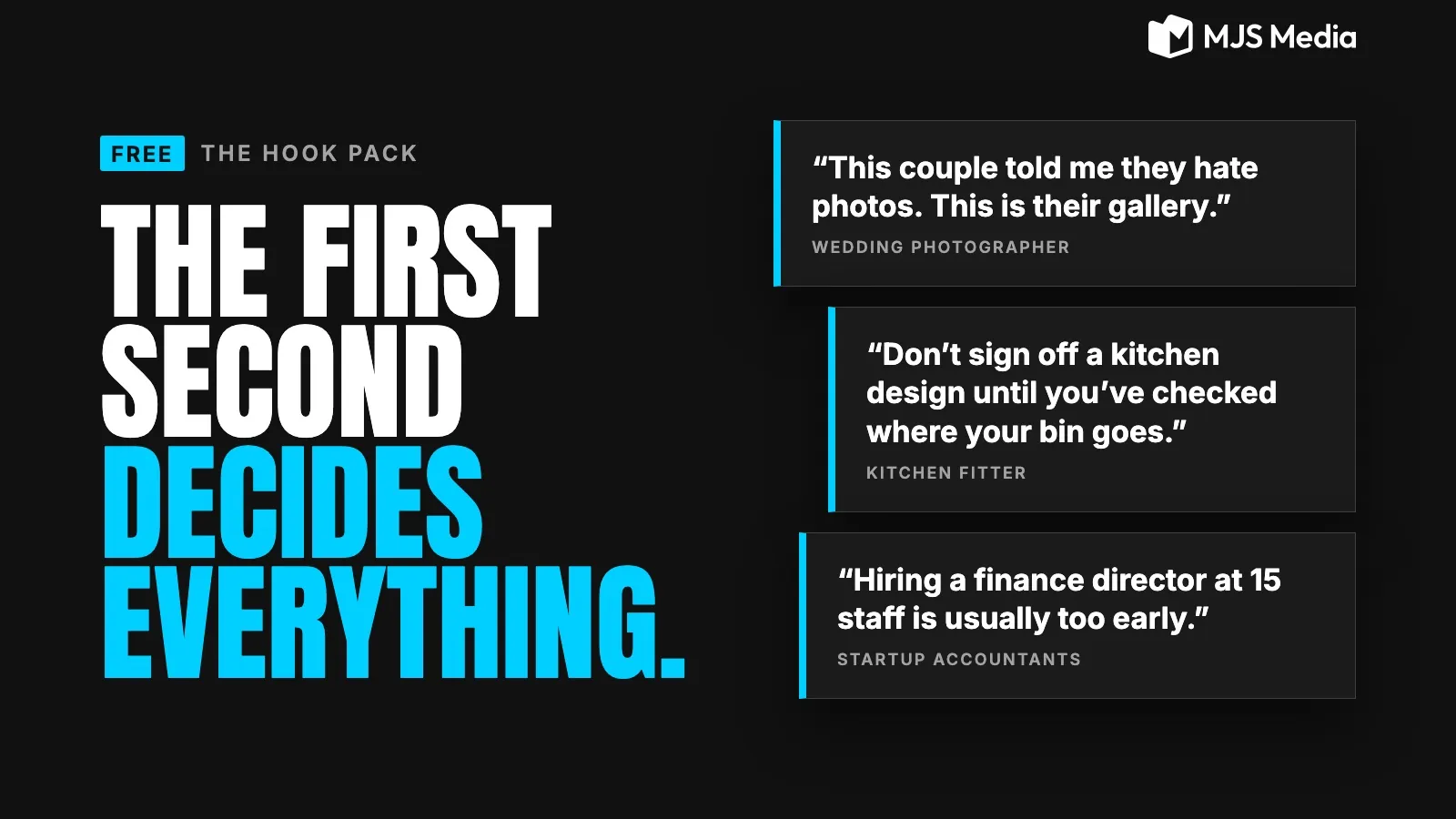
“This couple told me they hate photos. This is their gallery.”
Wedding photographer, opening on a photo from that gallery.
2. Share something you’ve seen
Credibility comes from real work, not a list of qualifications. A pattern you’ve spotted, a question you get asked, a change you made for a client.
“Most kitchens we rip out have the same plumbing problem behind the units.”
Kitchen fitter, with the old pipework in shot.
3. Disagree with the usual advice
Take something everyone believes and say why it’s wrong. People can’t resist hearing how it resolves. Only use this one when you can genuinely back it up.
“Hiring a finance director at 15 staff is usually too early.”
Accountants for start-ups, on LinkedIn.
4. Use a number that changes the story
A real figure makes advice concrete. A worked example on an actual price is far more watchable than general tips.
“How much deposit do you actually need on a £250,000 house?”
Mortgage adviser, with the house price on screen from the start.
5. Tell them what not to do (sparingly)
A direct instruction stops people in their tracks, but only when the next line gives them something worth having. Name the exact thing to check. “This one question” isn’t enough.
“Don’t sign off a kitchen design until you’ve checked where your bin goes.”
Kitchen fitter, opening on a pull-out bin.
Your customers have already written your best hooks
Think about the questions you answer every week: on the phone, in your inbox, at the end of every first meeting. “Will we get turned down?” “How long will I be without a kitchen?” “What if we’re awkward on camera?”
Every one of those is a hook. Ask the question, then answer it. Real questions beat clever ideas because the people asking them are exactly the people you want to reach.
Get 15 hooks written for your business, free
We’ve built a free tool that does this for you. It’s called The Hook Pack.
Answer 8 quick questions about your business, your customers and where you post. About a minute later you’ll have 15 video hooks written around what your customers actually ask, mixed across getting found, building trust and winning the work. Each one comes with:
- the exact opening line
- short on-screen text that works with the sound off
- how to film it, including what to show in the first second
- what to say next, so the video pays off
You’ll also get a two-week posting plan and three filming tips for where you are now. It’s all written to be filmed on your phone, today.
Rather someone filmed them for you?
A hook is only the first second. If you’d rather someone else looked after the rest, that’s what our Business Interview Series is for: one relaxed filmed interview, turned into 12 short-form videos.
Or start with the free hooks, film a few yourself and see what happens. Either way, stop saying “Hi everyone.”
Free The Hook Pack
Not sure what to post next?
Answer 8 quick questions and get 15 video hooks your customers will actually stop for, each with what to say next.
Get my free hooks